I find the money leaks. And I fix them.
A written map of where your money is going, with a number on each leak. I find five to seven. If I cannot find five, I say so and we stop.
Free. No obligation, and the map is yours either way.
Previously at
One thing breaks. Something else starts hurting.
Your business is one line, not four departments. Break any part of it and a different part starts hurting.
Most owners can feel that something is wrong. Far fewer can say which of the four it is.
None of these is a discipline problem. It is what happens when nobody is measuring.
Two businesses, two different leaks
USD 27,000
a year, stopped
Paying too much for a service, for years, without knowing it.
It had been running for years before anyone looked. We went through his P&L and found it. Then we worked together so he could do that thing himself, faster. The payment stopped and the money stayed in his business.
Until then I was running my restaurant alone and did not know many parts of my own business. The best result of working with you was stopping a leak of 27,000 dollars a year.
80% from 20%
of the activity
Campaigns that returned almost nothing, and no way to tell which ones did.
We looked at which activities actually produced sales. Four fifths of them came from a fifth of the effort. The rest was work with no return attached to it, so he stopped doing it.
If only 20% of your activities generate 80% of your sales, pay attention to that 20%. What are you waiting for? You are doing other activities that give you nothing. Put the emphasis on what is actually worth it.
Those numbers came out of one conversation each.
If I cannot find five, I say so and we stop
Some things I built
Real systems, running in real businesses.
A community app, with the team tools built in
One app for the members, and for the small team that runs it.
MY OWN PRODUCT · LIVE Read case study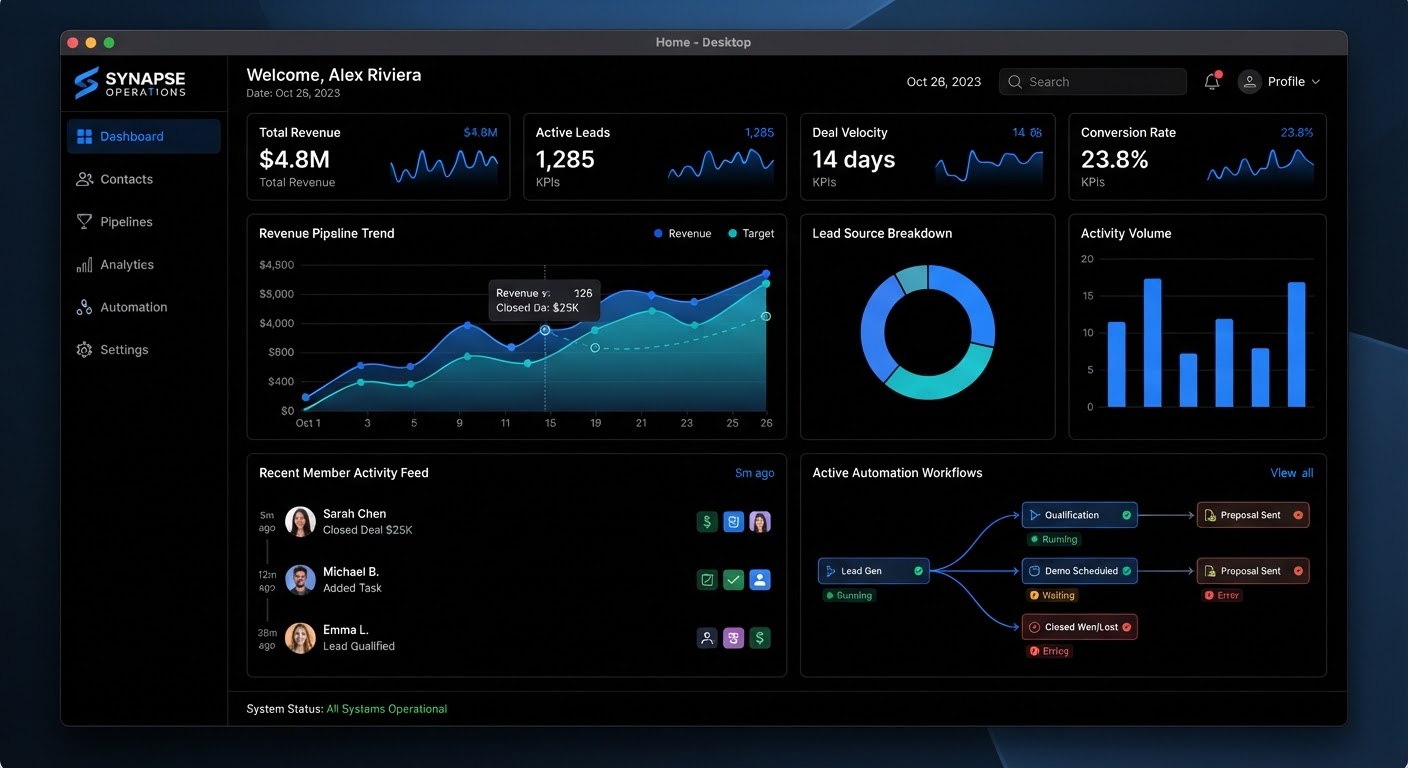
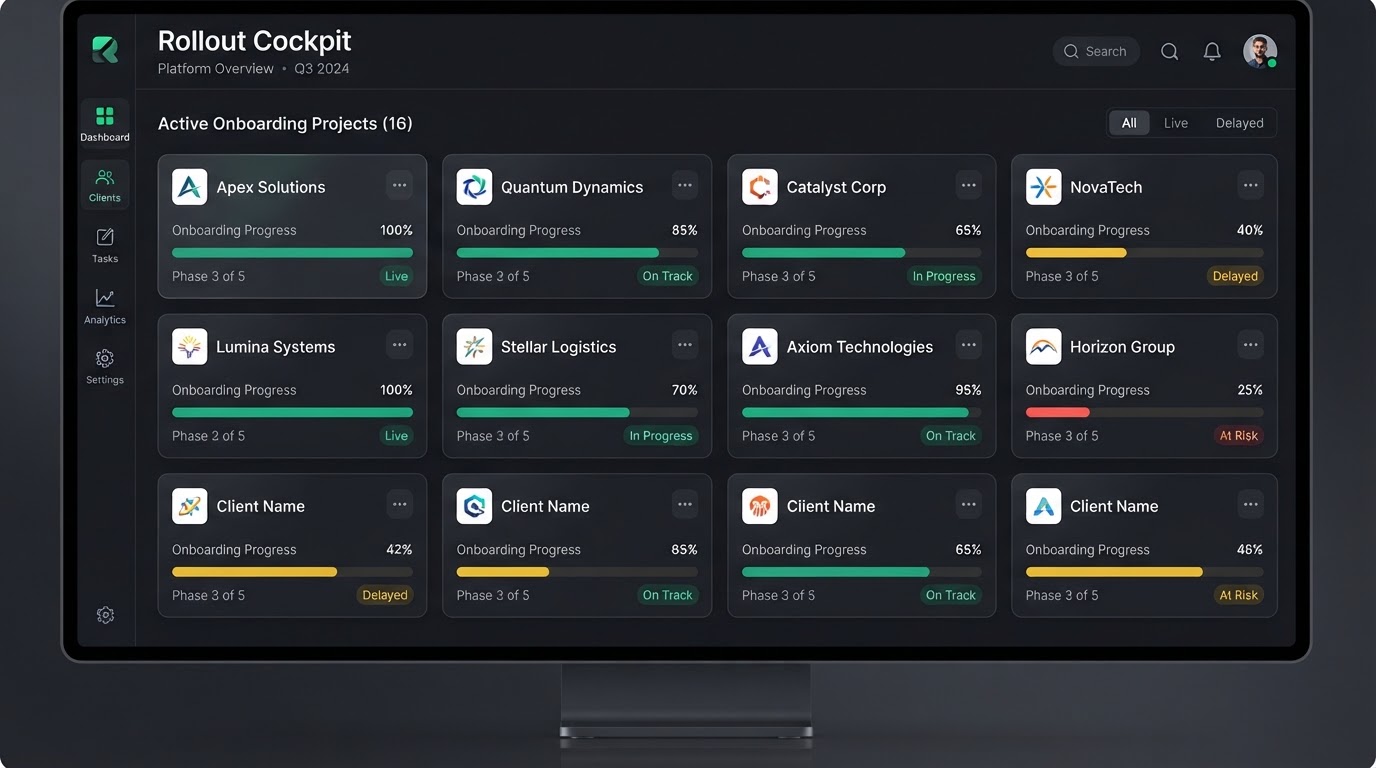
The work was in eight places, and none of them agreed
Eight tools held the work. None of them held the answer to what was due, from whom, and by when.
BUILT AT A B2B LEASING-SOFTWARE COMPANY · ANONYMIZED
Everything was somewhere. Nothing was anywhere.
Invoices, leads and conversations spread across whatever app they happened in.
PAID CONSULTING · ONGOING · NAMES WITHHELDNone of them knew the money was there
Neither business was badly run. The money was in their own numbers the whole time and nobody had looked.
Two ways to fix a business
The usual way
- Work more hours and hope it moves.
- Hire someone for the part that hurts the most.
- Buy a tool because a competitor has one.
- Automate whatever is easiest to automate.
Every one of these spends money before anybody has measured whether it is the problem.
The Money Map
- Measure first. Nothing changes before the problem is clear.
- Put a number on every leak, in money per year, from your figures rather than mine.
- Fix the process itself. Often that is a renegotiated contract, a rule about who owns what, or a step deleted entirely.
- Use software only where it earns its place. Automating a broken process makes it fail faster and cost more.
- Write it down, so your team can run it without me in the room.
Automation is one tool out of several and it is usually not the first one. The leak decides what the fix is.
What people ask before they say yes
This is going to eat weeks of my time.
It is a handful of calls of about 45 minutes, and I do the work between them.
You talk, I take it away and put numbers on it, and you get it back in writing.
The restaurant leak came out of one conversation and a look at his own P&L.
I already have an accountant, or an agency, or a consultant.
I am not competing with any of them, and they are usually good at their part.
Leaks hide between the parts, where nobody is responsible. That is exactly why they survive for years.
The restaurant had an accountant the entire time the overpayment was running.
This is a sales call with extra steps.
I am not selling you anything during the calls.
You leave with a map of your own business whether we work together or not. If I cannot find at least five leaks, I say so and we stop.
Nothing is invoiced for finding the problem, ever.
We tried automating things before and it did not work.
I believe you, and it usually fails for the same reason.
The wrong part got automated. If the bottleneck is somewhere else, software just makes something faster that was never the problem.
That is why measuring comes first here, and building comes late or not at all.
What is this going to cost me?
The map costs nothing, and you keep it either way.
You leave with the map either way. If you want me to fix what we found, that is a separate conversation held with your own numbers in front of us.
The map is free either way. Closing the biggest leak starts at EUR 4,500, and you get the price before anything begins. If it is not closed in 90 days, you stop paying and keep what is built.
Nothing above costs you anything to find out.
If I cannot find five, I say so and we stop
Who this works for
- You own or run the business and you can decide without a committee.
- Owner led, roughly 20 to 200 people.
- Spanish speaking, in the United States, Mexico or Europe. I work in Spanish, English and German.
- You are in the calls yourself, not a stand-in.
- You are willing to show me real numbers, even rough ones.
- You will give me a straight yes or no at the end.
Your industry is not the filter. Decision speed is.
Find out what your business is actually costing you.
Free, and the map is yours either way.